
I tried a Waymo from the airport to my accommodation.
This article was written for Western Sydney Publishing and published in July 20256.
Late last year, I was in Phoenix, Arizona, in the US for a conference. This was my first introduction to driverless cars. Large banners advertised Waymo’s driverless vehicles throughout the airport. So, of course, I had to try one.
Driverless cars are vehicles equipped with technology that allows them to navigate and operate without human input. These cars use a combination of sensors, cameras, radar, LiDAR, GPS, and artificial intelligence to perceive their surroundings and make driving decisions.
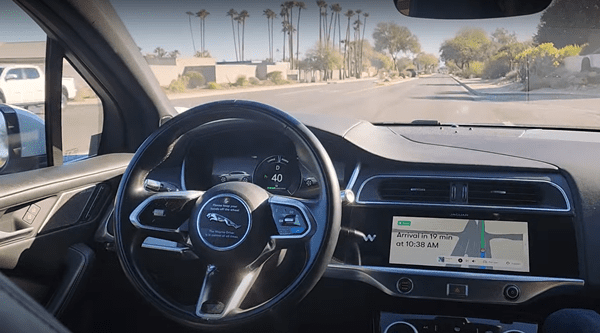
Autonomous driving is categorised into levels from 0 to 5. The Waymo cars were Level 4 and could operate within a Geofenced area.
• Level 0–2: Driver assistance (e.g., cruise control, lane keeping)
• Level 3: Conditional automation (driver must be ready to take over)
• Level 4: High automation (no driver needed in specific conditions)
• Level 5: Full automation (no driver needed at all)
In the end, I used Waymo on three occasions: trips to and from the airport and one trip to a tourist attraction. I must admit that it was a thrill being in one of these cars, and I did feel safe. Although the car would brake a little later than I usually would. The vehicle did encounter an issue when pulling into a busy car park. There were orange cones to direct traffic; it did not know how to deal with these and just stopped. A parking guide came over, moved the cones a few meters further back, and waved the car forward. That worked.
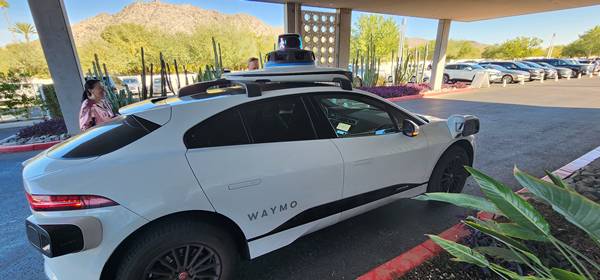
Will we see these cars in Australia soon? There have already been some trials, the most notable one being ZOE.2 in Mount Isa, which has been operating since 2023. ZOE.2 is a Level 4 Autonomous vehicle. The trial has been a success, with residents of Mt. Isa responding positively and experiencing widespread usage.
Australia is cautiously exploring autonomous vehicle technology. While Level 2 and 3 features (such as adaptive cruise control) are already available in many cars, Level 4 and 5 autonomy are not yet legal for widespread use. However, progress is being made. The government is working on a national safety framework, which is expected to be completed by 2026. Although full deployment is at least a decade away due to infrastructure, legal, and public trust challenges.
Australia’s vast geography, mixed road conditions, and regulatory complexity make it a unique challenge for AV deployment. But given my experience with Waymo, the technology will be here sooner than you think.
Comments are closed